

X
Upload CV
How to hire .NET developers in 2026
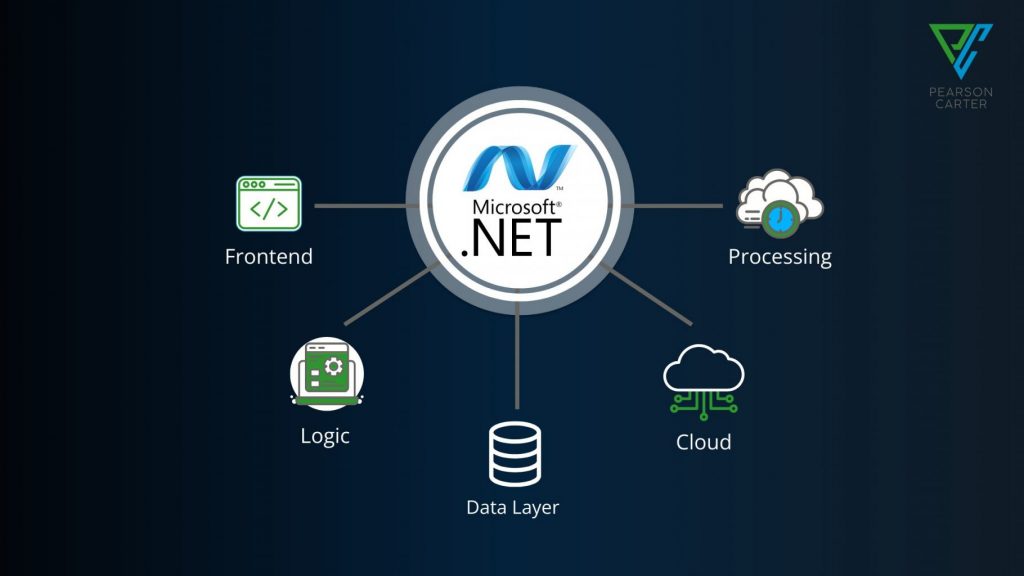
With incentives like these, where you need faster response times, better outputs, and less compute power, the framework that gives the best outputs is the .NET framework.
Naturally, companies would want to hire talent that is not only well-versed in .NET but can also work around it and create complete, ready-to-deploy applications.
But hiring .NET developers isn’t as simple, especially during a time when you can’t differentiate between expert vetted candidates and candidates who’ve only begun their journey.
Let’s look at some challenges of hiring the best of the best .NET developers, what qualities to look for, and why it makes sense to take help from vetted recruiters who’ve had experience in filling Microsoft .NET roles.
Challenges that arise when hiring .NET developers
The .NET Framework has been around since 2002. Despite the role being around for over two decades, it’s still relatively difficult to fill this role with a senior position.
Demand has accelerated faster than the talent pool, and companies don’t seem to understand the rising challenges.
1. The talent pool hasn’t grown at the same pace as demand
AI integrations, cloud-native rebuilds, and enterprise modernisation projects have exploded since late 2022 (the time when ChatGPT first rolled out).
Many organisations shifted their entire application stacks to .NET 8 and beyond. But the number of senior engineers with hands-on experience in modern .NET, C#, and Azure isn’t increasing at the same rate.
2. Senior .NET engineers aren’t actively job hunting
These folks are comfortable with the roles they already have, so they’re termed as “passive candidates”. They’d only budge if a role is enticing enough (we’re talking better salary than the current one, better incentives, etc.)
Plus, they engage mostly through referral networks or direct outreach. This creates a shortage on open markets, even when talent technically exists.
3. Companies want “full-stack .NET developers” (but that role barely exists)
Expectations have grown unrealistic, and there’s not a lot the industry can do about it.
With unrealistic expectations, companies come up with job descriptions that encompass several technologies. This looks something like this:
- C# backend
- .NET Core
- Azure DevOps
- Frontend frameworks (React, Angular, or Blazor)
- Microservices + containerisation
- AI/ML integrations
The more responsibilities you stack, the smaller the qualified pool becomes.
4. Market competition is higher than ever
This is a challenge that’s true to every industry, every business.
Startups, scale-ups, consultancies, and enterprises are all recruiting from the same limited group.
And because modernisation projects are time-sensitive, bidding wars are becoming common (especially for mid–senior roles).
5. Filtering true senior talent is truly difficult
With AI-assisted coding, junior developers can now produce output that looks senior on the surface.
And so, companies find it harder to grade candidates accurately without structured technical assessments or the guidance of experienced technical recruiters.
6. Hiring timelines are too long
The prolonged recruitment cycle is a common challenge. Multiple interviews, technical tests, and managerial approvals can stretch over weeks (sometimes months).
During this time, candidates don’t sit around waiting for that one offer from you. They’ll take up another suitable role. And you might lose the chance to hire a good .NET developer.
7. Last but not least, retention
Even after hiring the ideal developer, retention is another hurdle. Skilled .NET developers are in high demand, and turnover can be costly both financially and operationally. Here, we’d recommend focusing on career development opportunities and offering incentives to encourage talent to stay.
What the current Microsoft .NET roles look like
Before we head into how to hire for these .NET roles, let’s take a look at what these roles entail.
Across the UK and US, roles range from mid-level developers to senior architects and project leads, and the expectations are all over the place. The spectrum showcases a couple of things:
- Pay is all over the place. Junior roles might sit around £35k, but senior US-based roles can hit £180k. Location, seniority, and niche skills make a huge difference.
- No one is just a “.NET developer” anymore. Most roles mix .NET with cloud, ERP, or front-end frameworks. A vanilla C# developers are hard to find.
- Senior talent isn’t just coding. Architects and project leads are expected to design systems, integrate them, and guide teams — so technical skills are just part of the picture.
What to look for in .NET developers in 2026. And how to hire them in 7 simple steps
Hiring .NET developers in 2026 means competing in one of the busiest and most aggressive tech talent markets.
With the increased competition, it’s important to take a different approach to hiring .NET developers. So instead of treating skills and hiring steps as separate checklists, the most effective method is to align the requirements with the process itself.
Here’s how to do that in a way that helps you find strong candidates:
1. Start with a clear understanding of the technical skills you really need
Before you even publish a job ad, get aligned internally on the actual technical scope. Modern .NET roles typically require:
- Strong C# fundamentals
- Experience with .NET 6/7/8 and frameworks like ASP.NET Core, MVC, and Entity Framework
- Exposure to microservices, REST APIs, and cloud-native architectures
- Basic frontend capability (Blazor, React, Angular, or solid HTML/CSS/JS)
- A thorough understanding of object-oriented programming, SOLID principles, and clean design patterns
This clarity prevents the all-too-common “unicorn JD” that dilutes your candidate pool and slows hiring.
2. Include cloud and DevOps skills when defining seniority
In 2026, senior .NET developers are expected to work comfortably across cloud platforms, especially Azure. That means experience with:
- Azure hosting, databases, identity, serverless
- Docker and Kubernetes
- Git, CI/CD pipelines, and automation workflows
If these are essential for your environment, bake them into your evaluation process early instead of discovering the gap in final interviews.
3. Evaluate soft skills (and do it as a core requirement)
Strong communication matters more than ever. Modern .NET developers need to:
- Explain technical decisions clearly to non-technical stakeholders
- Collaborate with distributed teams
- Take ownership, troubleshoot proactively, and work independently
Include behavioural questions in your interviews that explore decision-making, ambiguity, and cross-team communication.
4. Identify whether industry experience is a differentiator
Domain knowledge can drastically shorten ramp-up time, especially in regulated sectors like finance, healthcare, insurance, and public services. If industry familiarity helps a developer succeed faster in your environment, list it as a preferred qualification, not an afterthought.
5. Speed matters (ignore internal team members who say it doesn’t)
Top .NET developers move fast. Many evaluate multiple offers at once, and long hiring cycles instantly push them toward competitors. Keep your process lean:
- Combine interviews where possible
- Be transparent about salary and expectations early
- Avoid multi-week assessment windows
- Give same-week feedback
A fast, respectful process is a competitive advantage.
6. Use a practical technical evaluation
Make sure your assessments reflect the work the developer will actually do, and do not assess them based on outdated quizzes. Here’s what we recommend:
- Run a short, relevant coding task
- Ask for a review of the past project code
- Conduct a short pair-programming or problem-solving session
- Optionally assign a focused take-home project (like a simple CRUD app in .NET Core)
This approach quickly separates juniors from mid-seniors and shows how candidates think, not just what they memorise.
7. Widen your talent pool beyond your local market
It’s completely okay to not find talent within a certain radius. Talent is everywhere, so the broader your reach, the more options you’ll have. We recommend broadening your search by looking at:
- Remote candidates within your country
- Nearshore regions with strong .NET talent
- International developers who already work in your tech stack
So don’t waste months searching locally when the right candidate may simply live in a different time zone.
8. Benchmark compensation realistically
Use sources like Glassdoor, Payscale, Indeed, and market reports to understand what competitors are offering.
Compensation isn’t just salary anymore. Flexibility, learning budgets, remote options, and project ownership heavily influence developer decisions.
9. Build a structured onboarding plan
Your hiring process doesn’t end at the offer letter. A strong onboarding experience accelerates productivity, increases retention, and sets expectations clearly from day one. Include a/an:
- pre-boarding communication
- environment setup
- architecture and codebase walkthrough
- early feedback loop
Some more recommendations + takeaway
The demand for .NET developer jobs is up, the supply is down, salaries are inflated in some regions, undervalued in others, and the “experience” you see on CVs doesn’t always match the skills you need in production.
Despite all this, talent exists. It just looks a bit different these days.
At Pearson Carter, we’ve spent the last year looking into different tech roles, including .NET developer job descriptions.
We’re seeing the same three patterns across SaaS, enterprise, fintech, and start-ups.
Let’s break down what’s actually happening in the market, and what the best teams are doing to still hire top .NET engineers without burning six months and three hiring rounds.
What really happens these days:
- .NET developers have fragmented into micro-specialties (MAUI + API-first devs + Azure-native + legacy .NET Framework maintainers)
- Senior developers are avoiding companies still running .NET 4.x or monolith architectures
- Cross-functional skills (cloud, AI, DevOps) are now baseline expectations, not bonuses
Don’t fish for .NET talent with a 2018 job description. Times have changed. And so should your job description.

JOBS BY SECTORS