

X
Upload CV
Why hiring AI Talent in 2026 is on every tech company’s roadmap
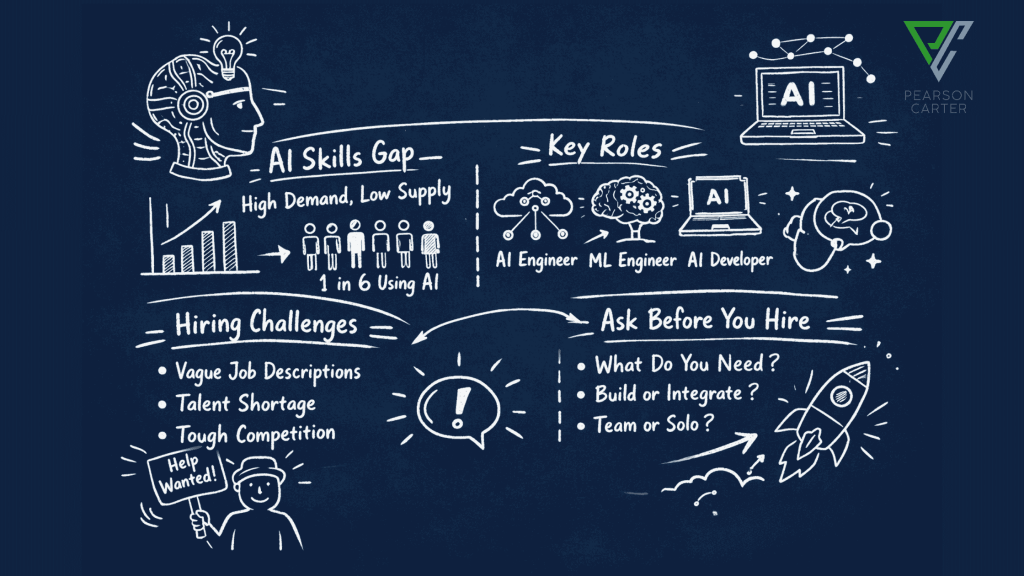
Since November 2022, the term “artificial intelligence” has gained a lot of traction. We’re now in the midst of implementing AI wherever we can. As a result, companies are now looking for talent that’s comfortable with using AI and knows how to get the most out of it.
The hiring part is where things are becoming complicated.
Despite the amount of discussion around AI replacing jobs, the bigger issue right now is actually the opposite: there aren’t enough people with the right AI skills to meet demand.
According to a 2025 global AI adoption report from Microsoft, roughly one in six people globally are now using generative AI tools, and adoption continues to rise across industries and business functions.
The important detail here is that AI adoption is growing faster than AI hiring strategies are maturing, which is creating a skills gap rather than a job shortage.
This is starting to show in how companies are hiring AI talent.
AI adoption is growing, but hiring hasn’t caught up
A lot of organisations are now implementing AI in:- automation
- customer service
- document processing
- analytics and forecasting
- software development
- internal copilots and knowledge tools
- finance
- operations
- customer service
- HR
- software development
- sales and CRM systems
The AI talent shortage is not what people think
When people talk about an AI talent shortage, they usually imagine companies competing for machine learning researchers. But that’s not the hiring demand, it’s more extended than that. Most companies are not building large language models or training neural networks from scratch. What they are doing is:- integrating AI into software
- automating workflows
- building AI-powered internal tools
- using AI APIs
- implementing copilots
- analysing business data
- AI Engineers
- Machine Learning Engineers
- Data Engineers
- Software Developers with AI experience
- Cloud Engineers working with AI services
AI is changing existing jobs more than creating new ones
One of the most interesting trends in the labour market is that AI is not creating entirely new job categories at the scale people expected. Instead, it’s changing existing roles. However, degree requirements for most roles have decreased by 15%. Which indicates that AI is augmenting existing roles, rather than replacing them entirely. That is why companies are increasingly hiring:- .NET developers with AI experience
- cloud engineers with AI experience
- CRM developers using AI tools
- automation specialists
- data engineers
- software developers building AI features
The biggest mistake companies make when hiring AI talent
A company decides they want to “start using AI,” and the first thing they do is try to hire: Senior AI / Machine Learning Engineer But when you actually look at the work they need done, it’s usually:- automation
- chatbot integration
- workflow optimisation
- reporting and analytics
- document processing
- CRM automation
- internal tools
- software engineering
- cloud engineering
- automation development
- data engineering
- struggle to find candidates
- hire the wrong profile
- or overpay for skills they don’t actually need
Why AI hiring is difficult right now
There are a few reasons companies are finding AI hiring challenging.1. Demand increased very quickly
AI adoption accelerated extremely fast after generative AI tools became mainstream. Hiring pipelines and university programs haven’t caught up yet.2. Roles are poorly defined
Many job descriptions ask for:- machine learning
- data engineering
- cloud engineering
- software development
- automation
- analytics
3. Experienced AI professionals are already employed
Most experienced AI engineers are not actively applying for jobs. Companies often need a proactive recruitment approach rather than relying on job ads.4. AI skills are now valuable across many roles
Candidates with AI skills are significantly more likely to receive interview invitations and job offers, which means companies are competing for the same talent across multiple industries. This increases competition for AI-skilled professionals even further.What companies should do before hiring AI talent
Before starting an AI hiring process, organisations should answer a few key questions:- Are we building AI models or using existing AI tools?
- Is this an automation project, a data project, or a software project?
- Do we need a data scientist, an AI engineer, or a developer with AI experience?
- Do we have the data infrastructure to support AI projects?
- Is this a one-person role or do we actually need a small team?
Takeaway
AI hiring is still a new area for many organisations and it shows. To add to that struggle, the companies treat it like standard software hiring. Hiring the right talent for your needs is what’s most important here. Before you make that important decision, it’s important to focus on a few pointers:- clearly define what they want AI to do in the business
- hire the right type of AI role
- and move quickly when they find the right candidates

JOBS BY SECTORS