

X
Upload CV
How IoT focused software developer roles are changing the job market in 2026
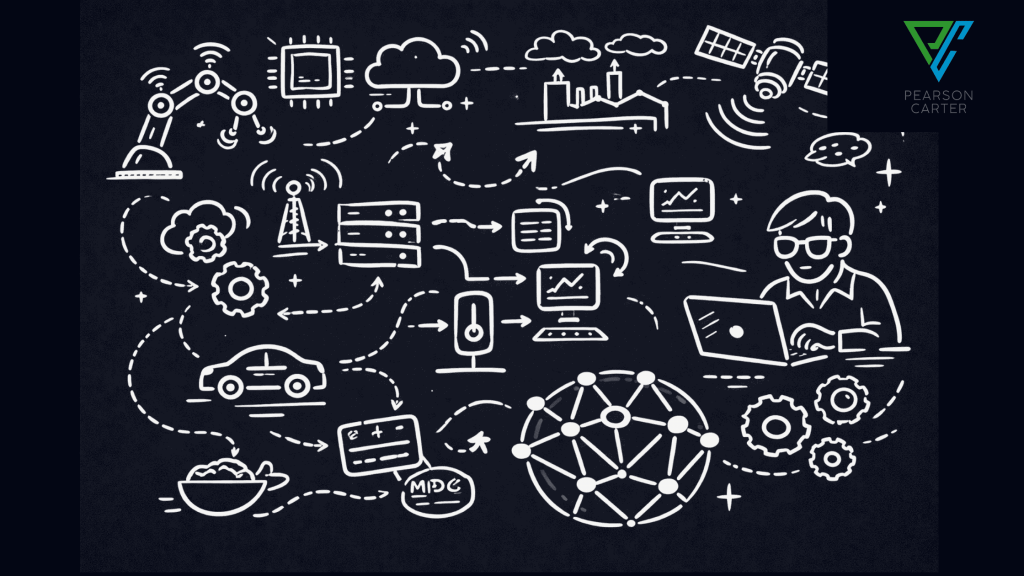
There’s an assumption that software developer jobs are becoming saturated and finding a role here is getting harder.
Which is partially true. A better way to put this statement is: software jobs are evolving, especially since 2022. That’s when we saw a boom in hiring.
Fast forward to 2026, there’s a change in how companies approach hiring for software developer roles.
And that’s mainly because of two things:
- Software is no longer limited to screens, it’s now embedded in physical systems
- Businesses are increasingly relying on real-time data to operate and scale
Is there still a need for software developers because of AI?
Let’s address the elephant in the room: yes, AI has disrupted entry-level roles, but it hasn’t touched demand for experienced engineers. Software development employment is still projected to grow 15% through 2033 (source: Bureau of Labor Statistics). Instead of generalist hiring, companies are prioritising developers who can work in:- Real-time systems
- Cloud-native environments
- Distributed architectures
- IoT ecosystems
What role does IoT play for software developer jobs?
In the last decade, IoT has evolved a lot. In fact, the number of connected IoT devices grew by 15% last year and that number is projected to grow to 38 billion by 2030. That indicates that IoT is no longer a niche category. It’s becoming a core part of how modern platforms operate, and the demand will only grow from hereon. Connected systems can be seen everywhere in businesses that carry out different tasks like:- Monitor assets in real time
- Automate decision-making
- Optimise performance
- Reduce operational costs
- Backend services (Node.js, Python, C#)
- Frontend applications (React)
- Cloud infrastructure (AWS)
- Hardware integrations (embedded systems, microcontrollers)
What software development skills are in demand in 2026?
Whether you’re writing a job description, sourcing candidates, or doing anything related, you need to look for the right skills. Based on what we’ve seen, the most in-demand skills across software development jobs include:- Strong programming in JavaScript/TypeScript, Python, or C#
- Experience with frameworks like React and Node.js
- Cloud knowledge (AWS, serverless architecture)
- API development and integration
- Database experience (SQL and time-series systems)
- Familiarity with CI/CD, Docker, and Git
- MQTT and real-time messaging
- Embedded systems and device communication
- Data pipeline and event-driven architecture design
- Understand system-wide impact
- Build scalable and maintainable architectures
- Work across multiple layers of the stack
- Solve real-world performance challenges
Remote vs on-site software developer roles
A lot of good talent out there prefers remote roles. In fact, 98% of the workers want to work remotely for at least part of their required time (source: Forbes). However, if we talk about specific niches, like IoT and hardware-integrated environments, on-site or hybrid work is still common. This is because:- Developers need to interact with physical devices
- Testing often happens in controlled environments
- Collaboration with hardware teams is required
Entry-level vs experienced hiring
Expectations for entry-level roles are changing. This is because of various factors, like AI, post-COVID hiring boom, the subsequent layoffs, etc. Now, most companies are not hiring purely for potential anymore. They are hiring for impact, which is directly proportional to the expectations. Even junior candidates are expected to have:- Project experience (personal or commercial)
- Understanding of modern frameworks
- Basic knowledge of cloud or APIs
- System design
- Performance optimisation
- Cross-functional collaboration
Why companies are still struggling to hire
There’s a surplus of experienced candidates in the market, however, companies are still struggling to hire effectively. This is largely due to self-inflicted obstacles. Overly specific job descriptions, unrealistic expectations across multiple tech stacks, slow hiring processes, and a lack of clarity on project scope mean that even in a buyer’s market, the right hire remains difficult to find. On top of that, many hiring managers don’t have the technical expertise to properly evaluate candidates, and short-term thinking leads them to chase an impossible “perfect fit” rather than someone with strong fundamentals who can grow into the role. This scenario holds true in complex domains like IoT, where the required skillset spans multiple disciplines, making rigid, checkbox-style hiring the norm for endless vacancies despite the surplus availability of talent.What is the role of specialist recruitment in this?
Hiring in today’s market requires more than posting a job. It requires understanding:- What skills are actually needed
- What can be trained vs what must be hired
- Market availability and salary expectations
- How to position the role competitively
- Understanding the technical environment
- Aligning hiring with business goals
- Identifying candidates who can deliver impact
Final thoughts
The software development market isn’t shrinking but it is getting more niche-focused. And IoT is a clear example of where that specialisation is happening. For candidates, this means focusing on depth and real-world application. For companies, it means hiring with clarity and realism. If you’re looking to hire or explore opportunities in this space, Pearson Carter can support software development recruitment across global markets.
JOBS BY SECTORS